Your product catalogue may contain thousands of products with detailed specifications, descriptions, and documentation. But how much do you actually know about the packaging surrounding those products?
With the EU's new Packaging and Packaging Waste Regulation (PPWR) now applying, information about packaging materials, composition, and recyclability is becoming increasingly important.
And for businesses managing large product assortments, keeping that information accurate and accessible can be a challenge.
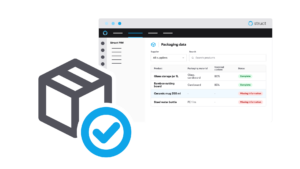
Packaging data: An overlooked part of product information?
Imagine a company selling 10,000 products from multiple suppliers.
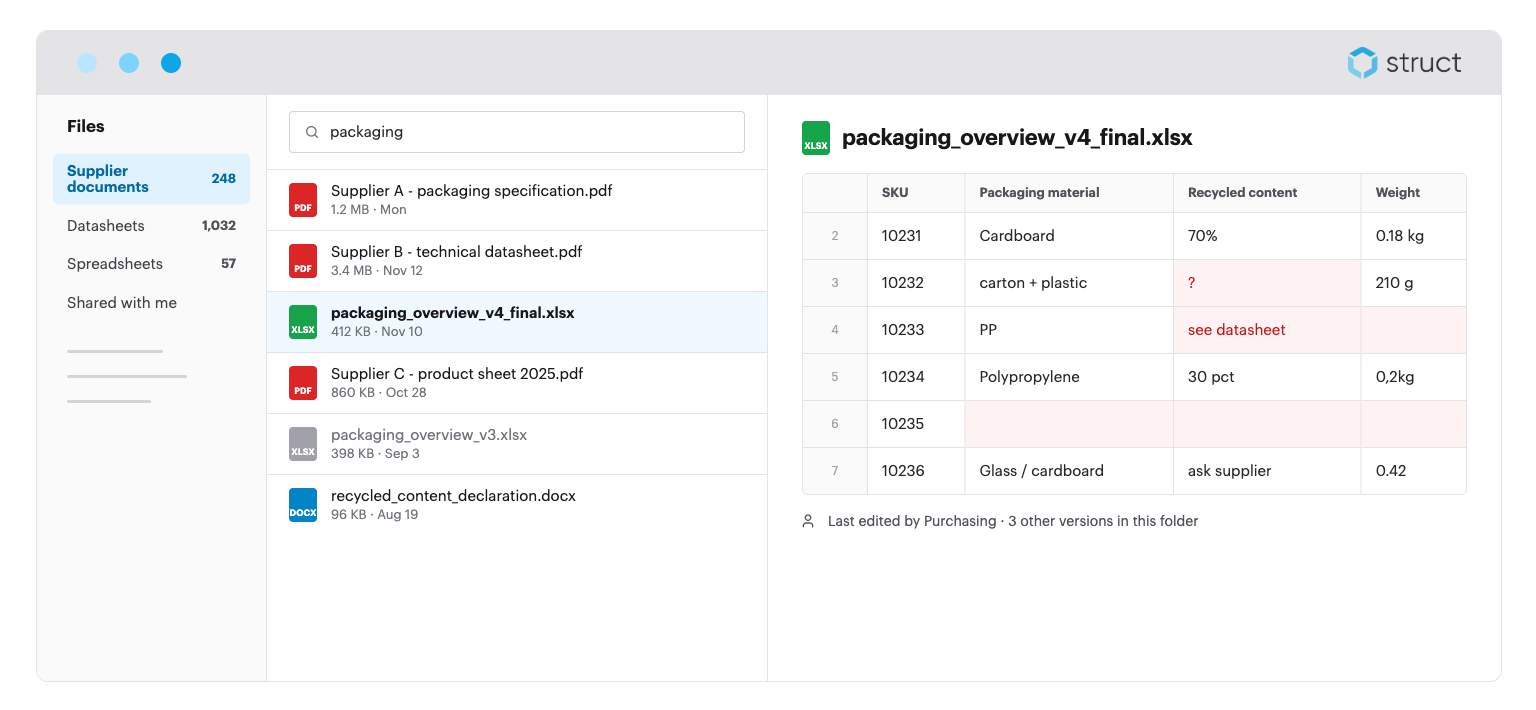
Its product information may already be well organized, but packaging specifications could be scattered across supplier PDFs, technical datasheets, and spreadsheets.
Which materials are used for each product's packaging? How much recycled content does it contain? And where is the supporting documentation?
These questions are becoming more relevant as businesses prepare for the EU's new packaging requirements.
The Packaging and Packaging Waste Regulation (PPWR) began applying on August 12, 2026, with additional requirements being introduced over the coming years.
According to the European Commission, the regulation introduces measures covering:
- Recyclability: New recyclability requirements, with additional criteria applying.
- Recycled content: Minimum recycled content requirements for certain plastic packaging.
- Labelling: Harmonised packaging labels to help consumers sort waste correctly.
- Packaging reduction: Measures to reduce unnecessary packaging and certain single-use formats.
The specific obligations and deadlines depend on the packaging type and the business's role in the supply chain.
From scattered supplier documents to structured packaging data
The challenge isn't necessarily that businesses lack packaging information. It's that the information may be stored in different formats, managed by different teams, and difficult to maintain consistently.
So, how can businesses approach this in practice? Let's return to the company managing 10,000 products.
First, collect the information already available.
Packaging specifications may exist in supplier documentation, technical datasheets, or other files.
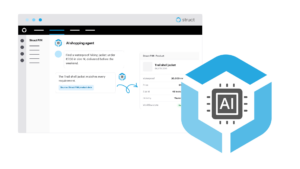
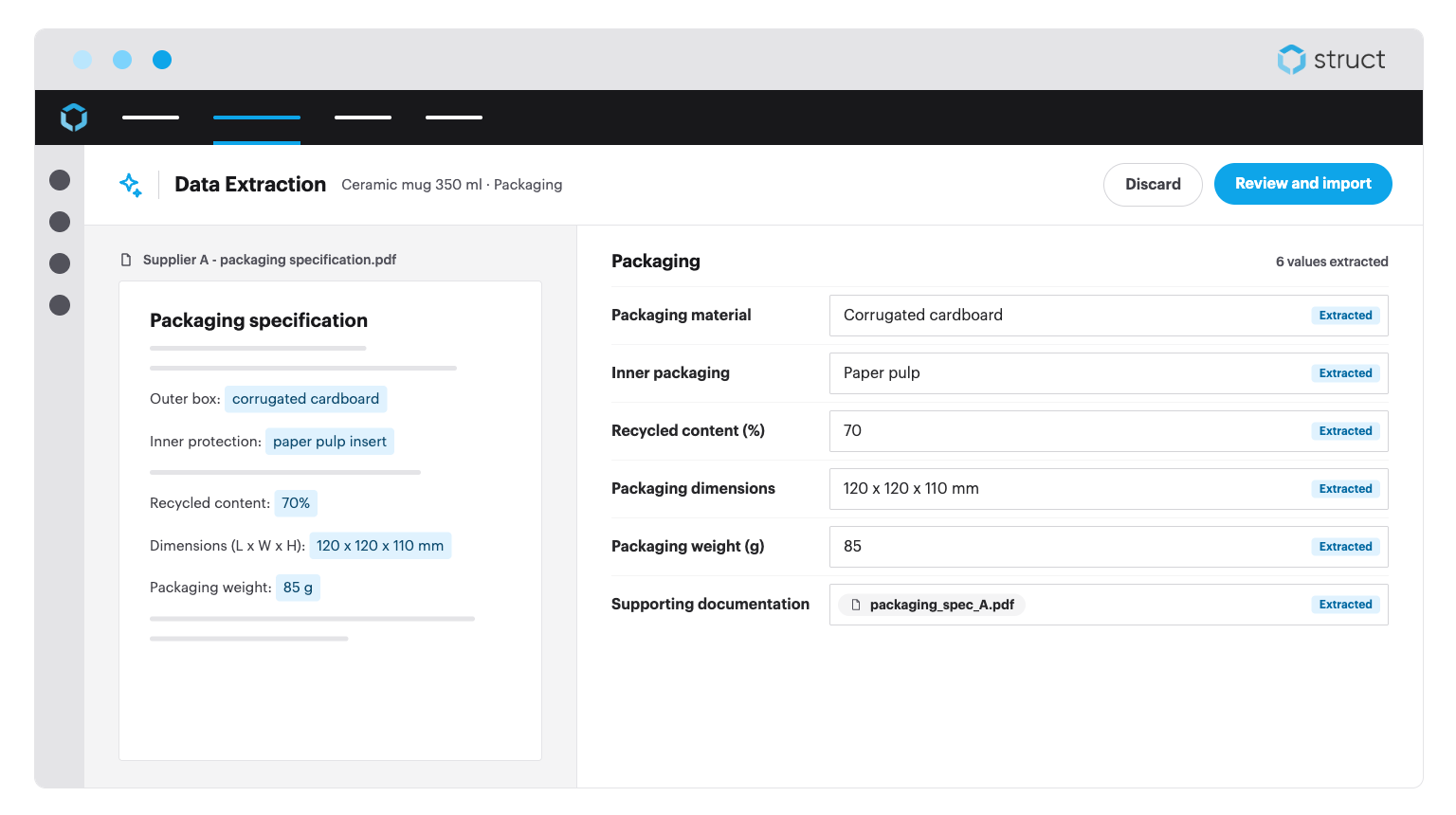
Instead of manually reviewing every document, businesses can use Data Extraction in Struct PIM to extract relevant information using AI.
For example, packaging dimensions, material specifications, or recycled content can be extracted and reviewed before being added to the product data model.
Next, give the information a consistent structure.
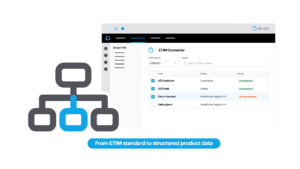
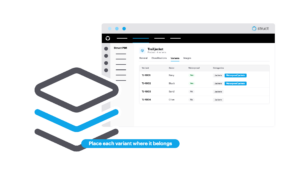
With Struct PIM's flexible data modelling capabilities, businesses can define attributes for packaging materials, dimensions, weight, and other relevant specifications.
This makes it easier to maintain packaging information consistently, even when different suppliers provide data in different formats.
Finally, identify what's missing.
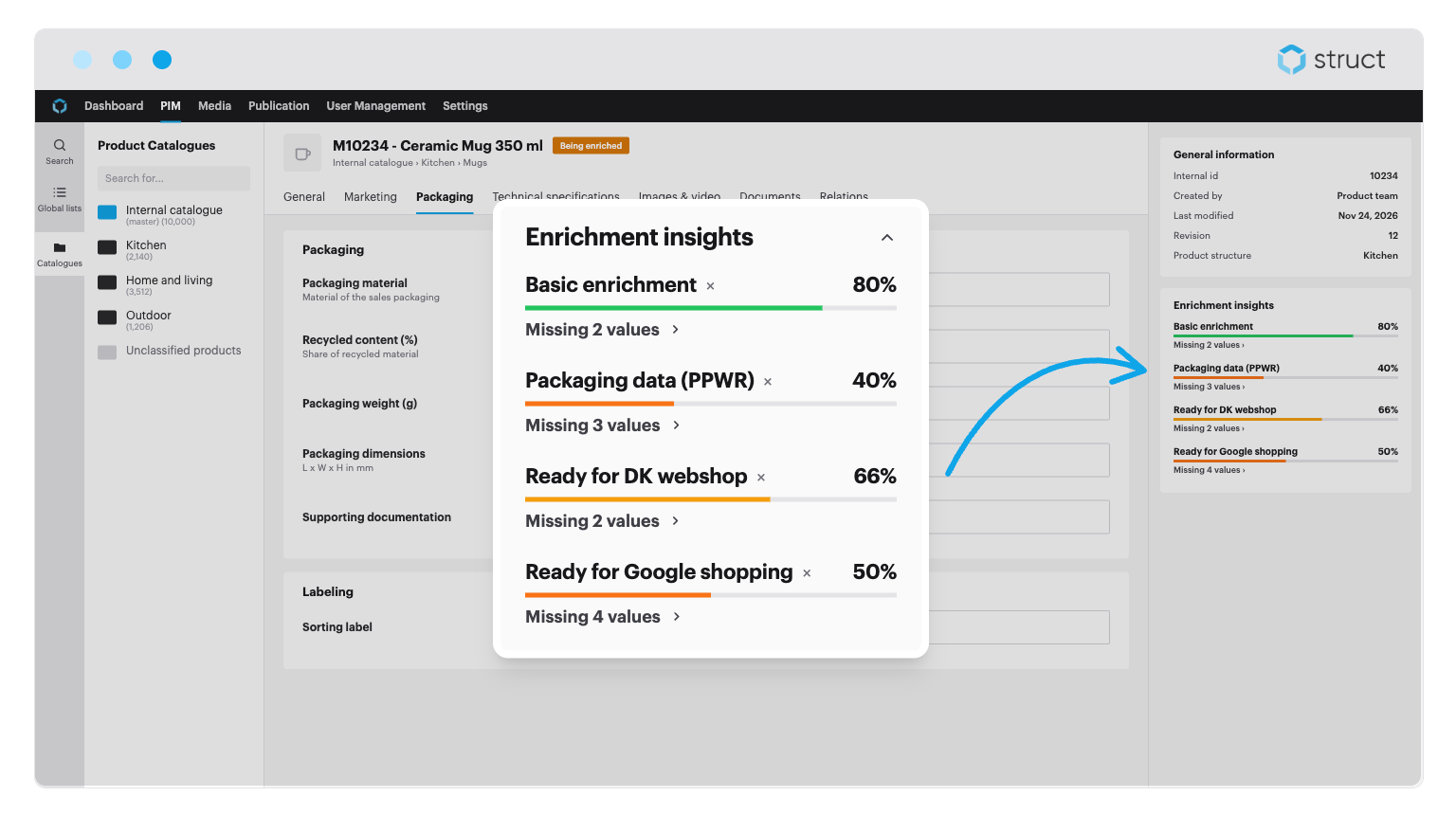
With Enrichment Insights, product teams can define completeness criteria and identify products where relevant packaging information is missing.
Instead of searching through thousands of records manually, teams can focus on the information that still needs attention.
Preparing product data for changing requirements
The PPWR is another reason for businesses to take a closer look at how they manage packaging information.
While Struct PIM is not a dedicated compliance solution, it can help businesses collect, structure, and maintain the product and packaging data that support their compliance processes.
And with additional EU packaging requirements approaching, getting that information organised now can make future changes easier to manage.