
Regulations, compliance and documentation
New EU requirements. One structured place for the documentation.
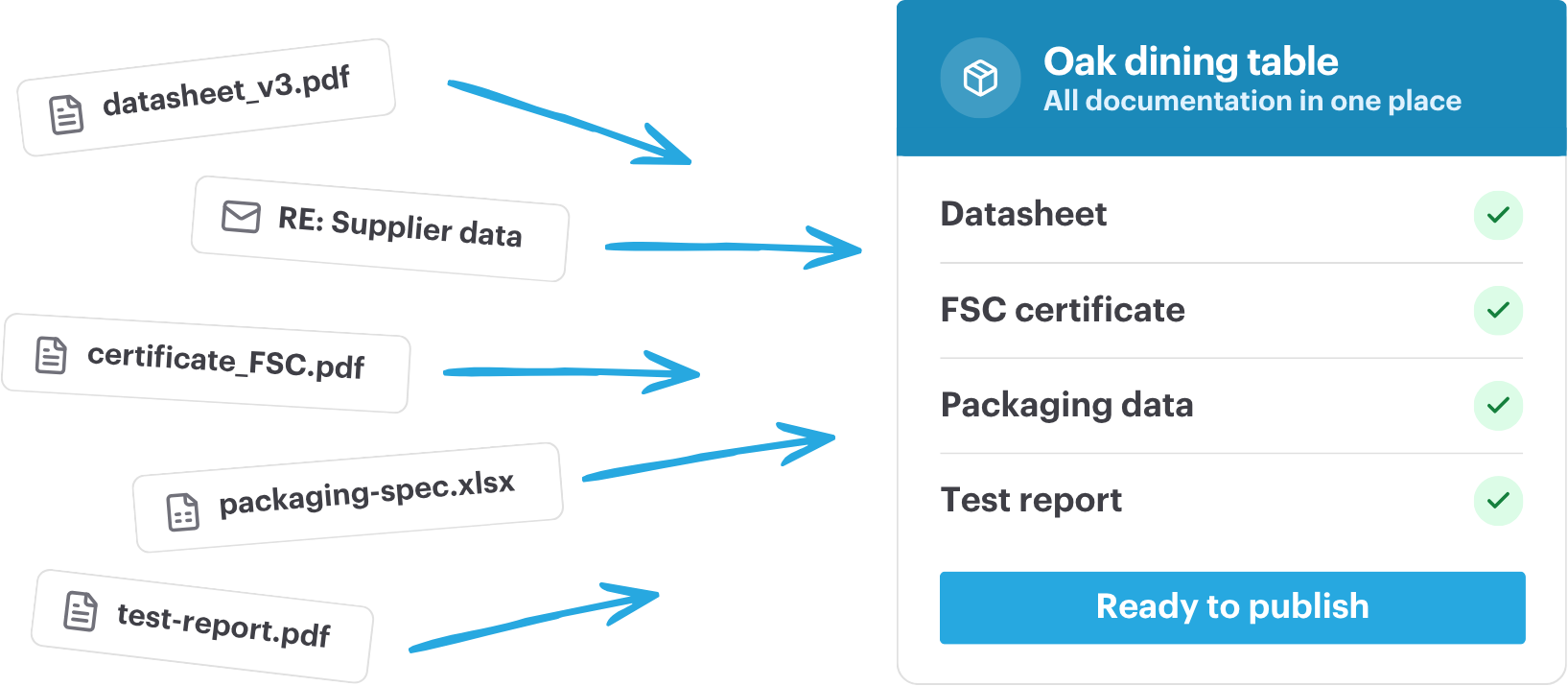
New EU regulations all ask for more product data, documented per product. Whether you make furniture, food or industrial goods, that data is often spread across suppliers, spreadsheets and systems. Struct PIM brings it together, from product creation to publication.
The requirements
Three regulations. One common demand.
The rules differ, but the consequence is the same: complete, documented data for every product. When that data lives in spreadsheets and email, every new requirement becomes a project of its own.
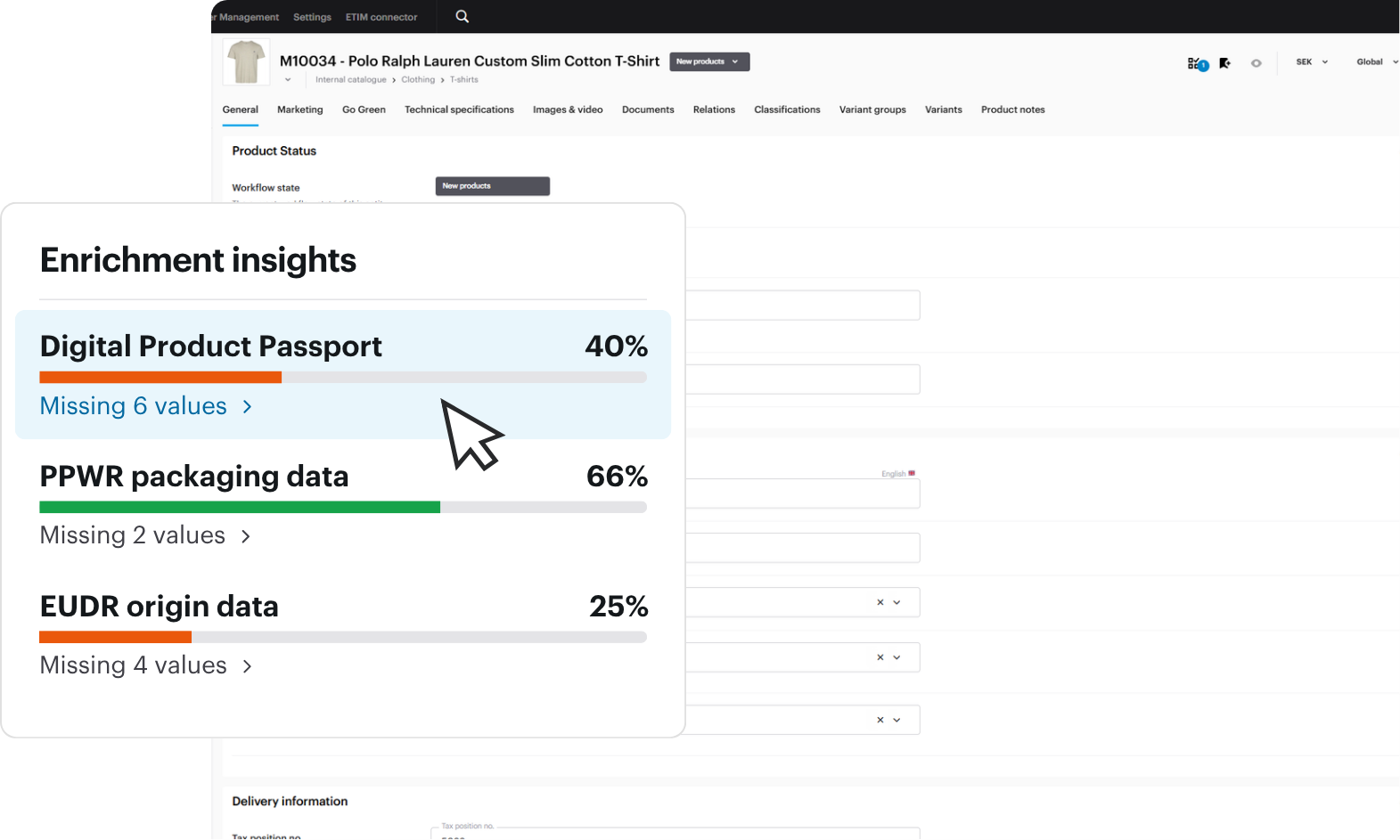
Digital Product Passport
Data on materials, sustainability and circularity, linked to each product.
Packaging and Packaging Waste Regulation
Data on packaging materials, recyclability and labeling.
EU Deforestation Regulation
Proof that wood, cocoa, coffee, soy and similar commodities are deforestation-free.
How Struct PIM helps
From product creation to product publication
Compliance is not a separate task at the end. It follows the product through every step, in the same platform.
Flexible product modeling
Built for B2B industry, whatever you make
A sofa, a ready meal and a power tool have little in common. Except that each needs a data model that fits the product, and room for the documentation the rules require.
Below are two examples. In Struct PIM, every product type gets its own model, whatever the industry. Without writing code.
Example industry
Furniture
Materials, finishes, dimensions and components as variants and relations. Wood origin and material data live on the same product.
Variant group: Sofa Oslo
Example industry
Food
Ingredients, allergens, nutrition and packaging in one model, localized per market.
Product: Organic granola 500 g
And beyond
Any B2B range
Electronics, textiles, batteries, construction products or machinery. A model per product type, with the attributes your rules require.
Product models
 Buyer's guide
What you should know before choosing a PIM solution
A short, practical guide for teams shortlisting a product information management platform.
Guide · Free white paper
Before you choose a PIM,
- What to look for in a PIM solution
- Questions to ask before you decide
- Useful for product, e-commerce, procurement and finance